
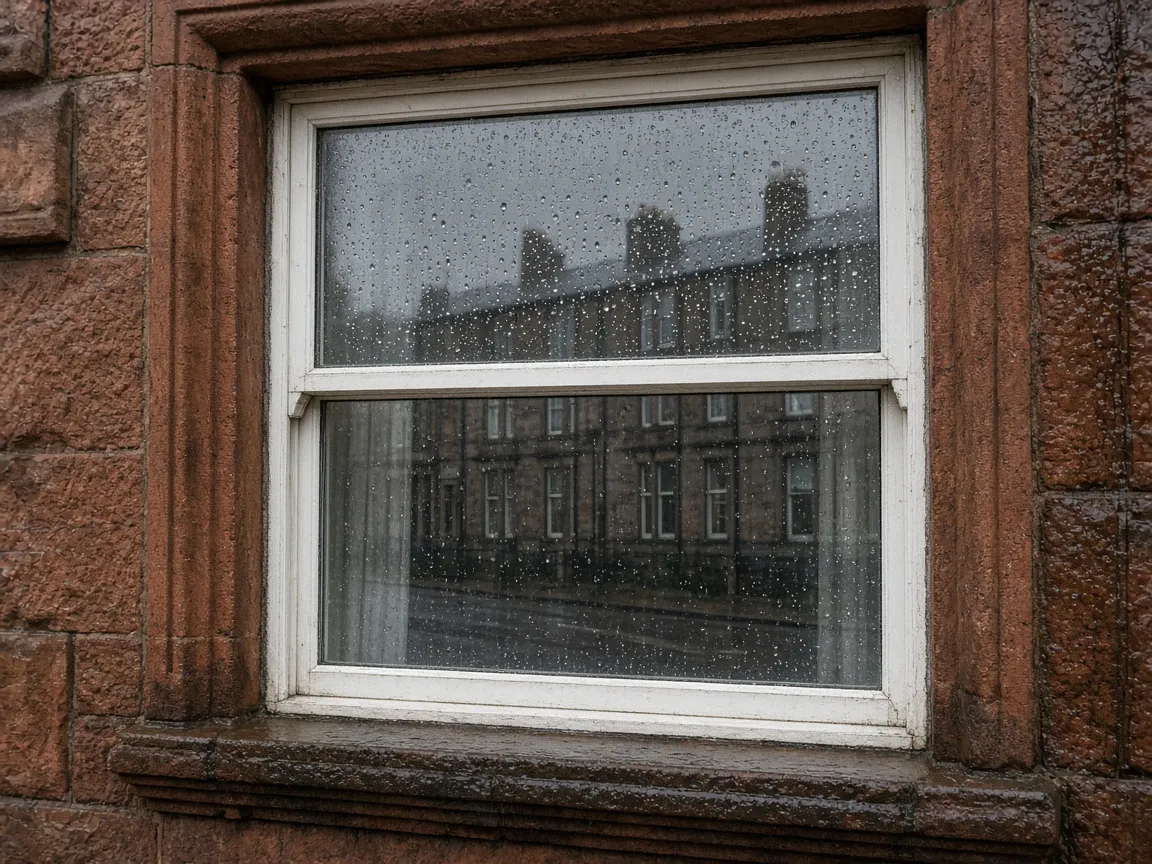
A tenement flat holds cooking steam, drying laundry and the breath of several rooms behind one shared close door. When outdoor air is cold and indoor air is moist, water gathers on the coldest surface it can find — often the glass or the frame edge.
Moisture in a tenement and a flat
Solid stone walls and compact rooms change how moisture moves compared with a detached house. Bathrooms without a clear extract path, kitchens that open into the hall, and bedrooms that stay closed overnight all raise indoor humidity. New glass can reduce cold spots on the pane, but it does not remove the moisture source on its own.
Ventilation and daily use
Trickle vents, extract fans and simply opening a sash after a shower matter as much as frame choice. A survey talks through how the flat is lived in before it promises a product. We do not invent climate statistics or building-warrant rules here; the surveyor confirms what the property needs.
What a wet-winter survey looks for
On a damp day the surveyor notes where water sits — room-side glass, between panes, or on surrounding stone. That pattern points to different next steps, from ventilation advice to consideringreplacement UPVC windows where frames have failed. Related reading:replacing windows in a Glasgow tenement.